Community theatre
Software for a volunteer community theatre
Production and ticketing for volunteer community theatres, from auditions to the door. Built by theatre parents.
I am a theatre dad. That is the whole origin story.
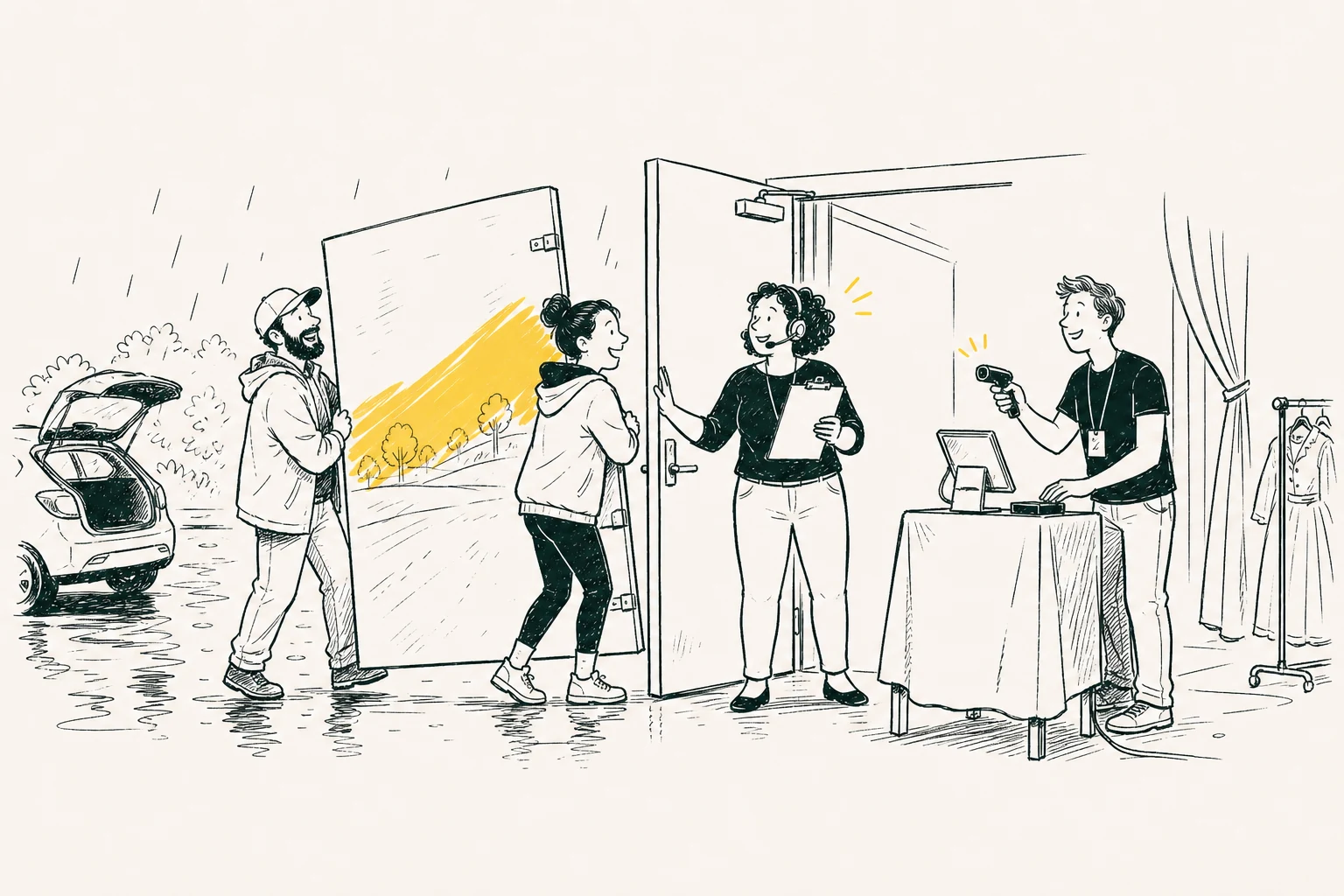
I have carried flats across a wet parking lot. I have counted a cash box at a folding table. I have stood next to a volunteer at 6:30 who was rebuilding the will-call list by hand, because the list she printed at lunch was already wrong. Then I would go to my day job and build software, and it never stopped bothering me that the hardest part of my kids’ show was the part that happened offstage, in a spreadsheet.
So we started building the thing we wanted for our own theatre. Not a presenting-house Ticketmaster stack with the numbers filed down. Not a class-registration product that learned to sell a recital. Software for the volunteer house, written by people who are still in the building on a Saturday.
The shape your house already uses
One organization. A season. Productions on the board. Performances with a date and a door. Nothing to translate, because that is already how you talk about it in the group text.
Reserved, general admission, and the door
Most houses sell both. A reserved Saturday, a general-admission Sunday, a season ticket that has to land in the right seat, and a walk-up with exact change.
Reserved or open seating is which house you can actually run on opening night.
The door is part of that same sale, not a separate job handed to whoever is free. Will-call should not live on someone’s personal computer. The house committee should not become IT the week of opening. Nobody signed up for the show hoping to do a data export.
The four months before the door
Ticketing vendors sell the door, which is the easy half. The hard half is the four months in front of it: auditions, costume measurements, a rehearsal calendar that moves on Tuesday, and the sign-up sheet nobody can find.
That is why we started at the beginning of the work instead of the end, and it is the part a ticketing-only vendor cannot reach. It also means the cast list and the ticket buyers are not strangers to each other. One household record covers the child in the rehearsal room and the family buying seats for closing night, so nobody is reconciling two lists by hand.
Free until a seat sells
Tools are free. You only pay at the door: a dollar when a reserved seat sells. General admission is free for small events for a limited time. Comps and free tickets are $0, because a comp is not a sale. No monthly line, so a dark January costs you nothing.
If your spring production never sells a seat, we never make a dime. That is the deal I would want if it were my kids on that stage, so that is the deal we wrote down.
A second production nobody cast
The vendors every volunteer house already names are good at selling the door. That was never our complaint. We started this because the tools had quietly become a second production, running alongside the one we were trying to put on.
Compare is the honest version of that: what each vendor publishes, on the day we read it, and why a house like ours still needed something simpler.
If something is already going wrong
Three bad weeks send a volunteer house looking for something else. The ticket page went dark during tech. A parent is still the box office. Or strike was two weeks ago and the money has not arrived.
Any of the three is a fine place to start. None of them get better on their own.
Start with the show
Apply and name the production. Not the org chart, not the season, just the title on the poster and what you are selling tickets with today.
How a community theatre sells tickets is the order of the work. What it costs to sell a ticket is the dollar. Community theatre statistics 2026 is the field with sources on it: budgets, volunteers, attendance, and published fees.
Frequently asked questions
- Who is Places for?
- Volunteer community theatres. Directors, stage managers, costume crews, house committees, and the parent who got handed a laptop and told they are box office.
- What does Places cover?
- The whole production, from auditions and costumes to rehearsals and the door. We are building it in that order because that is the order the work actually happens in.
- What does it cost?
- Tools are free. Places earns a dollar when a reserved seat sells. General admission is free for small events for a limited time. Comps and free tickets are $0.