University performing arts
Student-season box office for a campus theatre
Software for the people running a student season, not a presenting-house Ticketmaster stack.
A student season needs a box office the department can actually run. Reserved seats for the mainstage. General admission for the black box. Comps for faculty, guests, and whoever the dean is bringing. A door that does not turn into a laptop in the lobby ten minutes before house opens.
This is not a presenting-house stack for touring acts, scaled down. It is for the people who put the student season up: the chair, the production manager, the faculty designer, and the student worker who has the box-office shift on Thursday.
Your best-trained person graduates in May
That is the part campus software never accounts for. The student who finally understood the seating chart, the comp list, and the report the department needs at the end of the run walks across a stage in a gown and leaves. In September you train someone new, and the only documentation is what the last one remembered to write down.
A box office for a student season has to be learnable in one shift. Not because the people are new to work, but because they are new every year, and the show still opens on time.
The season the department controls
Campus halls come with inheritances. A seating chart nobody on staff can edit. A comp list that lives in a spreadsheet because the system cannot tell a paid seat from a papered one. A rented PAC that requires the landlord’s ticketing system for one weekend in February.
That landlord tool is not your season system. It is a condition of the room. The department still needs one place where the whole season lives: organization, season, production, performance, in the same words the callboard already uses.
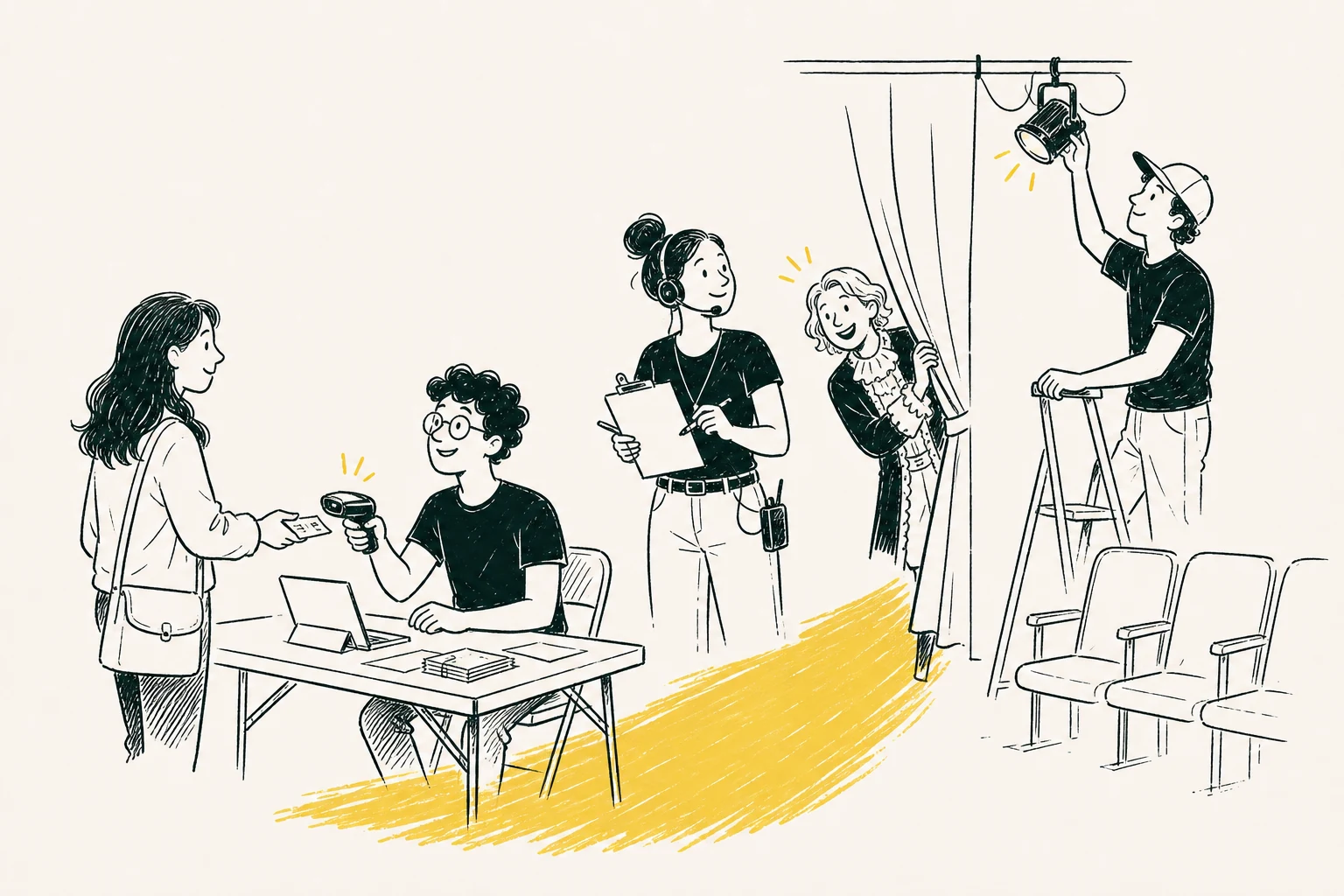
What the house needs
- A seat map the department can keep current itself, without filing a request.
- Ticket sales that the student on shift can run without a supervisor.
- Comps counted as comps, so the numbers at the end of the run are the numbers.
Free is not a procurement problem
Tools are free. You only pay at the door: a dollar when a reserved seat sells. General admission is free for small events for a limited time. Comps and free tickets are $0, because a comp is not a sale.
On a campus that matters twice. Nobody has to shepherd a purchase order through two committees before the season goes on sale, and the summer, when nothing is playing and nobody is on payroll, costs nothing.
If you want the sourced picture of what the usual vendors publish, start at Compare. Volunteer houses belong on Community theatre.
Frequently asked questions
- Who is this page for?
- Campus performing-arts leads who sell a student season. Christian and liberal-arts student theatres, not a Big Ten presenting house.
- How is this different from community theatre?
- Same production language, different building and different buyer. A student season runs on an academic calendar, with comps for faculty and guests and a box office staffed by students who graduate.
- What does it cost?
- Tools are free. Places earns a dollar when a reserved seat sells. General admission is free for small events for a limited time. Comps and free tickets are $0.